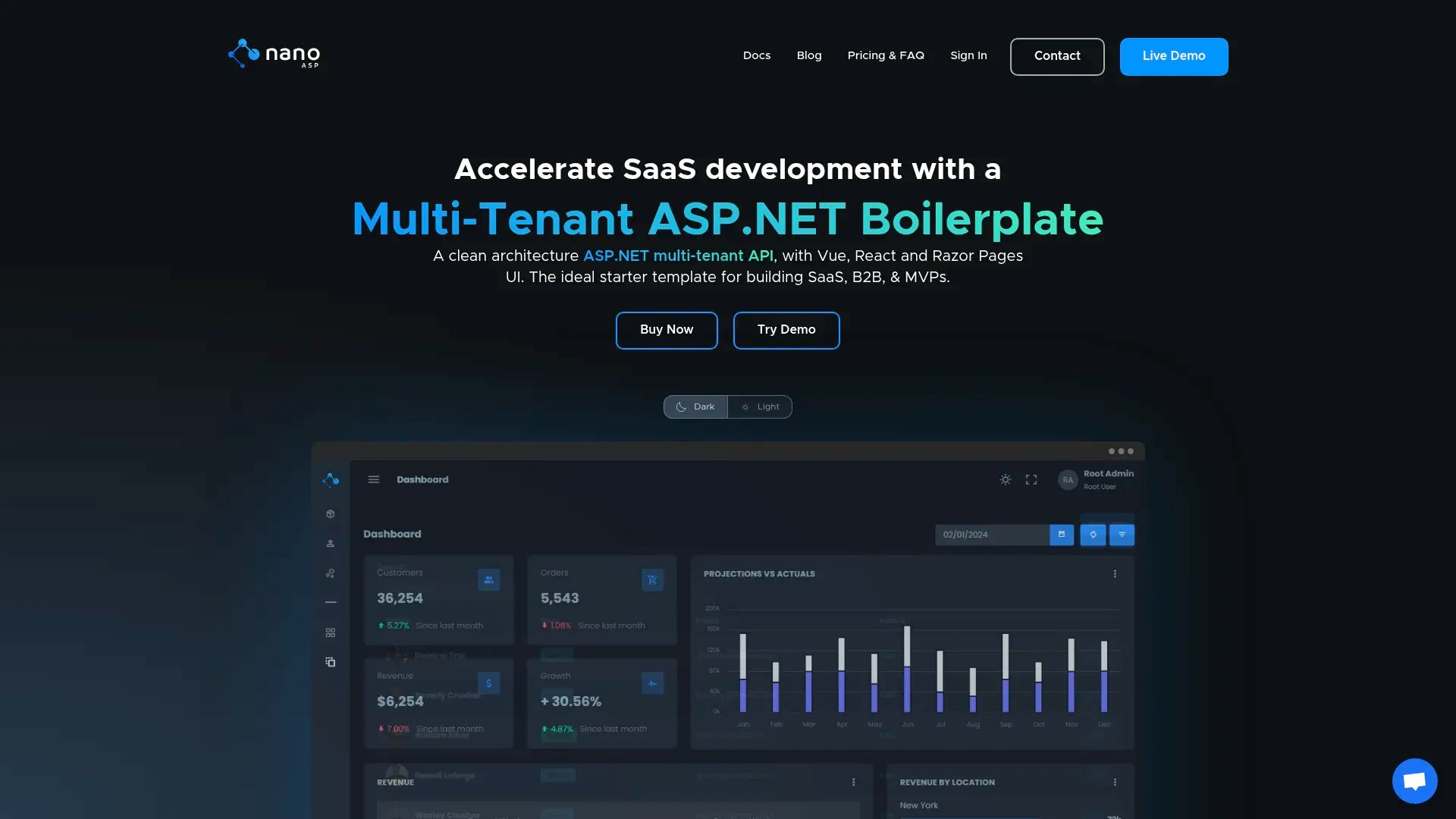
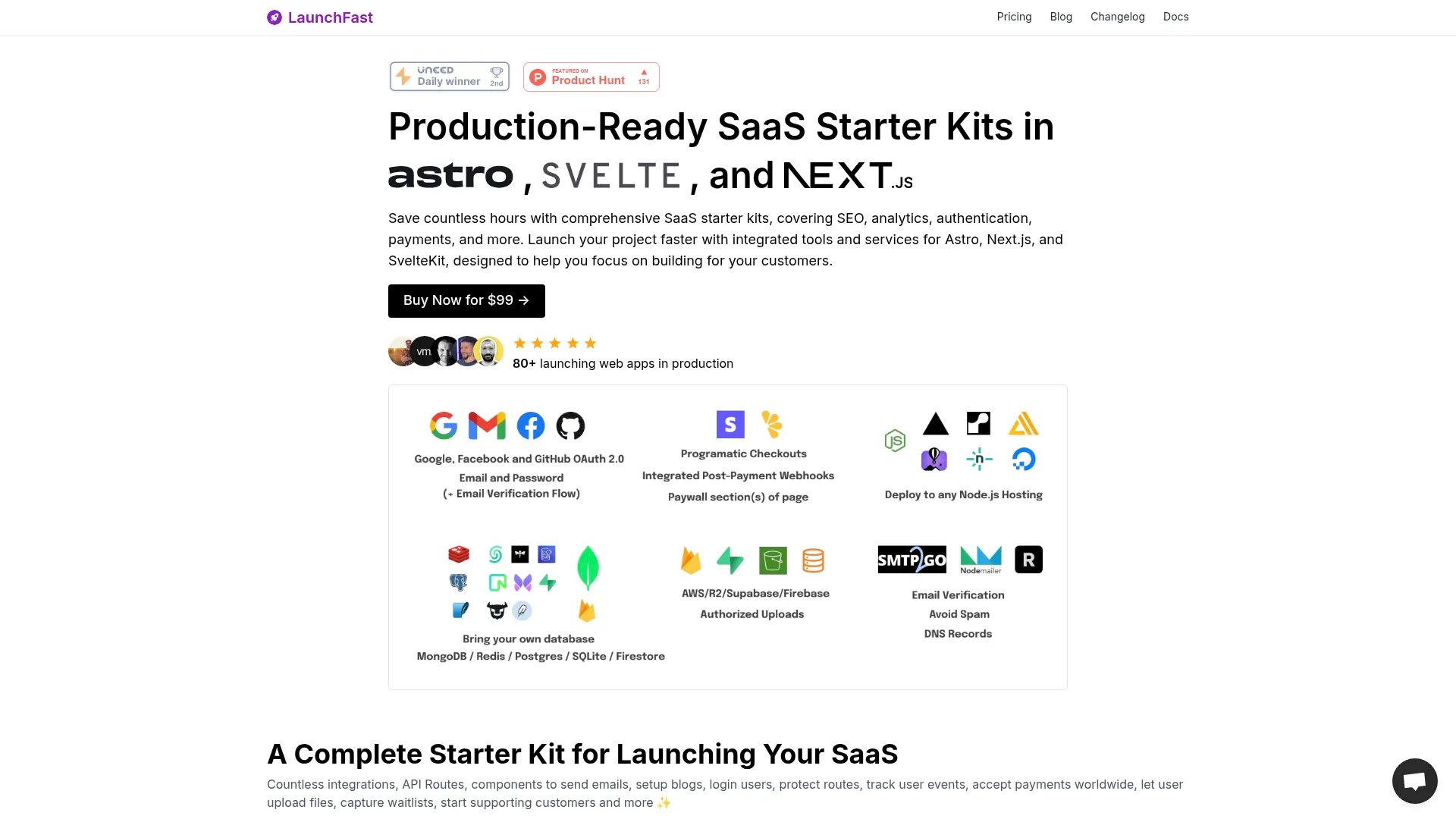
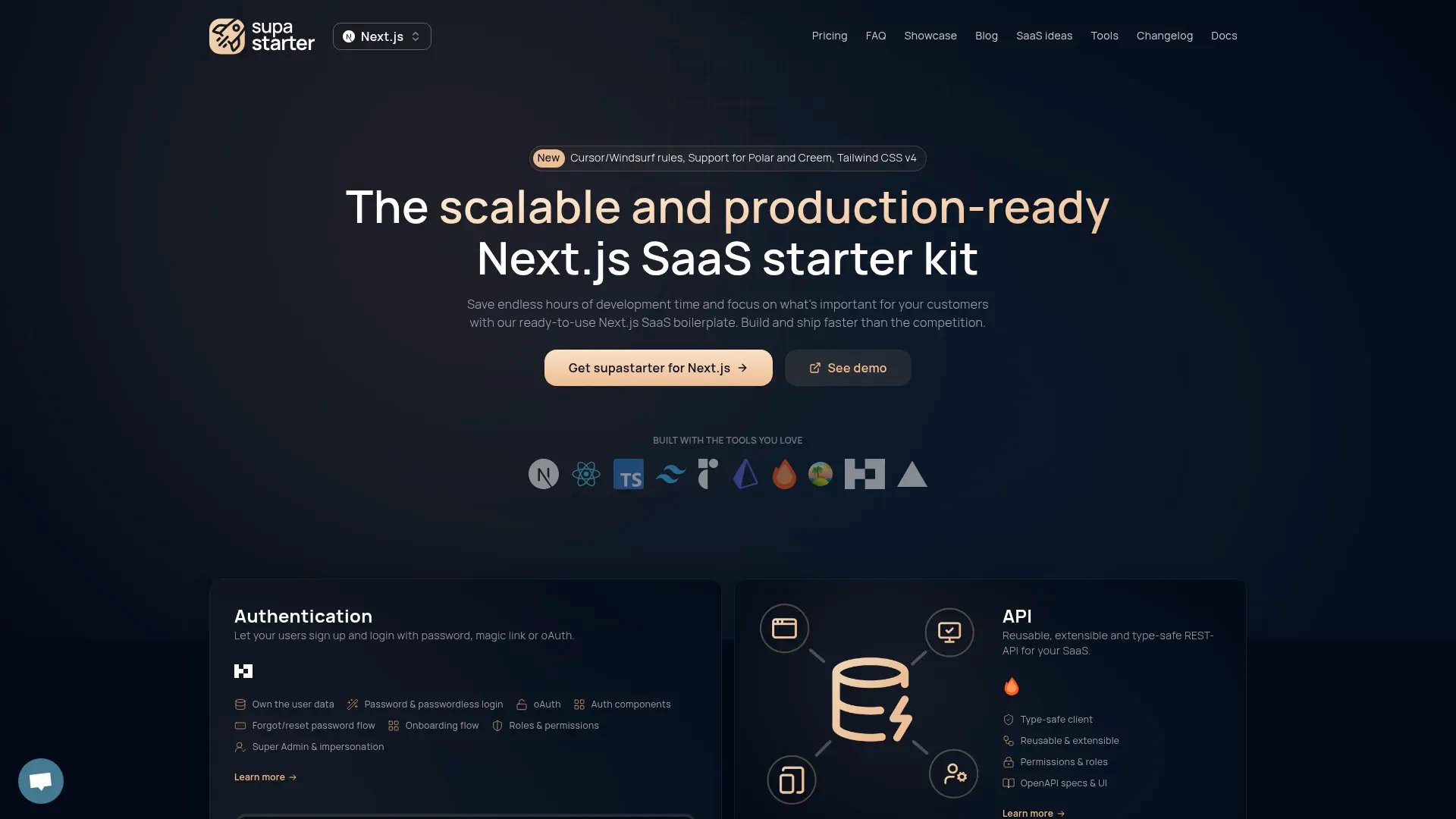
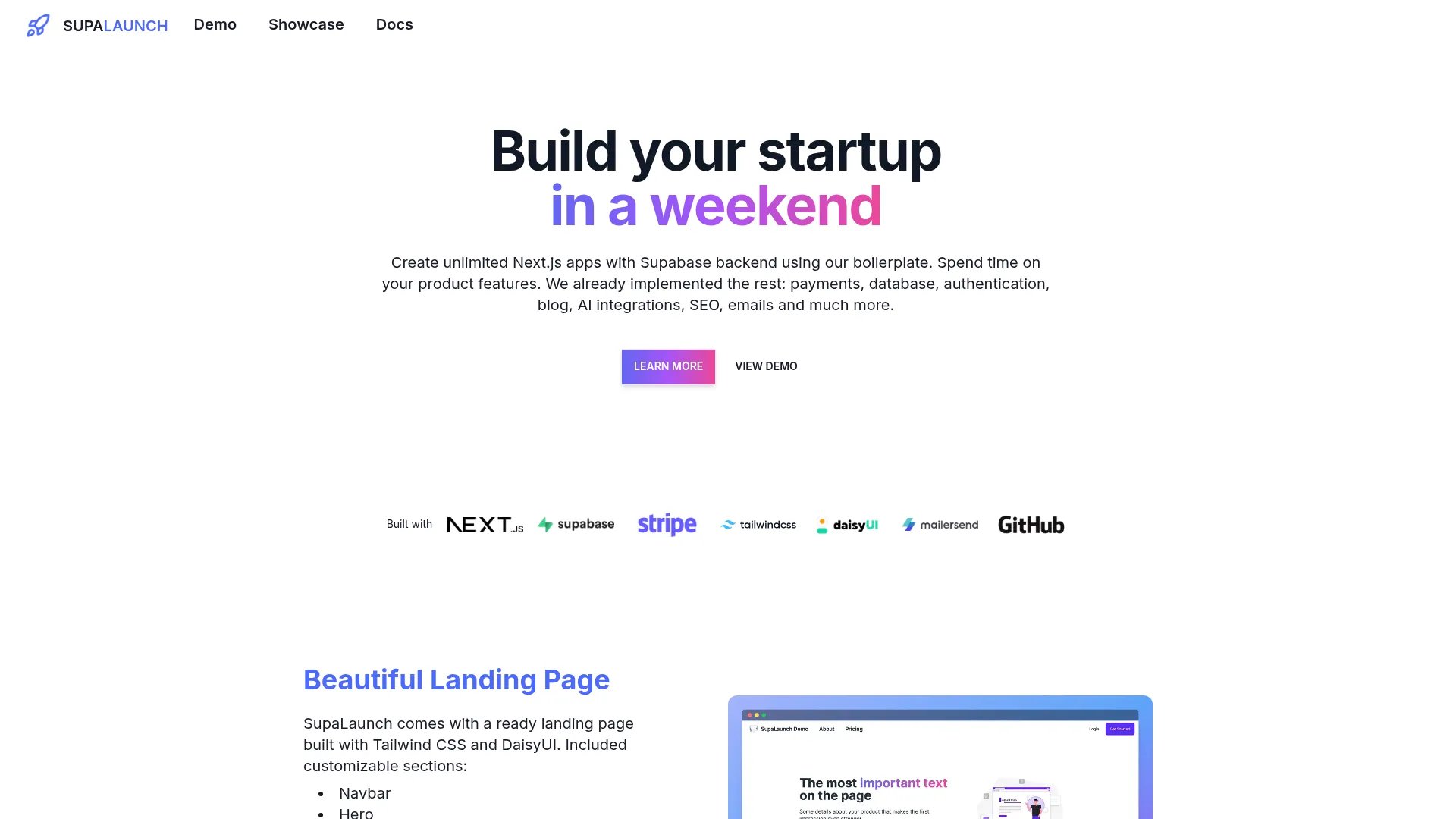
The minimal ASP.NET boilerplate for individual developers and small teams
A simpler alternative to the ABP framework. Unopinionated and easy to adapt. A full-stack SaaS boilerplate that doesn't force you to relearn everything.
Essential SaaS MVP Features
Authorization / Authentication: Pre-configured authentication with ASP Identity, JWT and cookie-based authentication, refresh tokens, mailing infrastructure
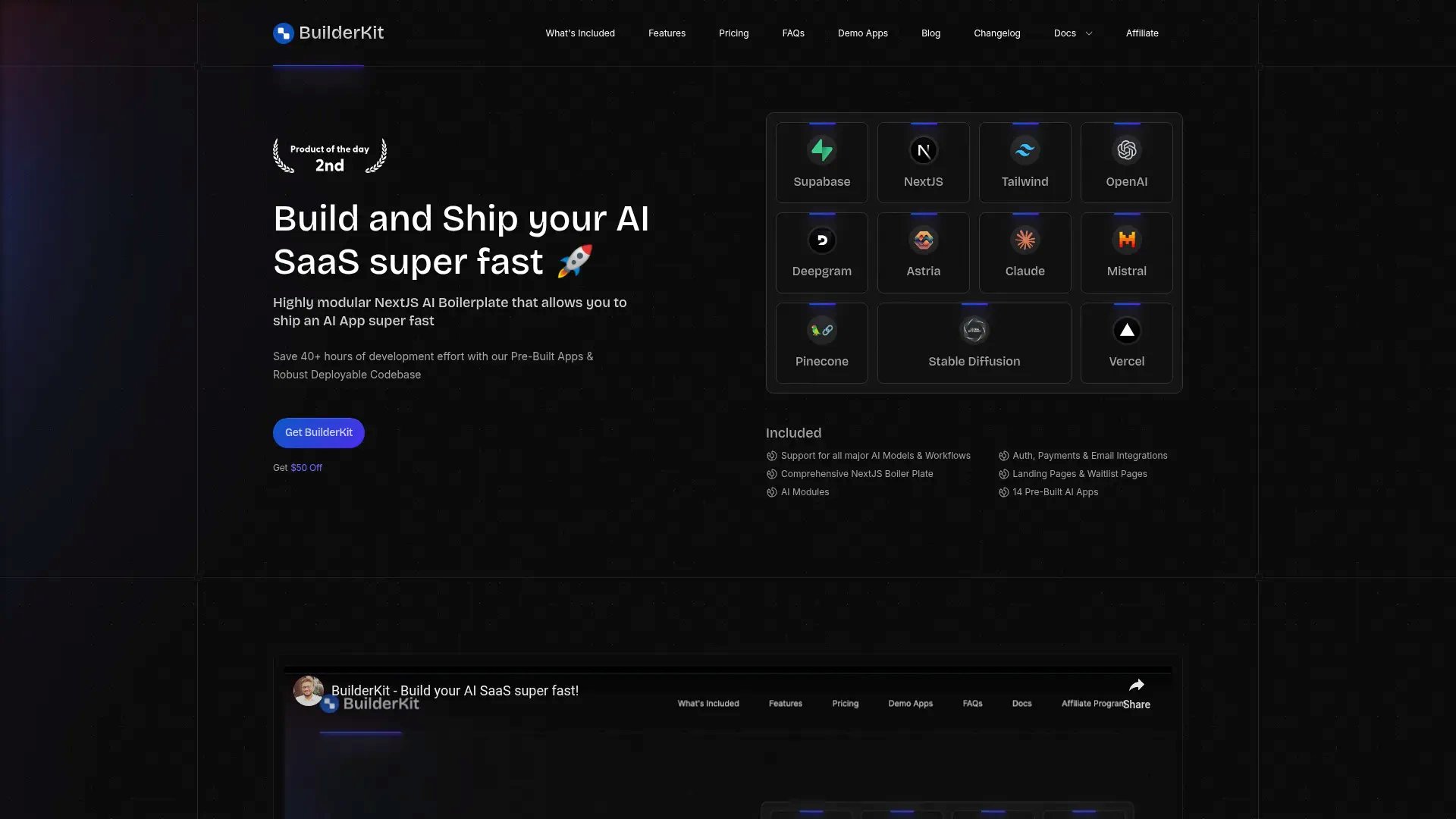
Highly modular NextJS AI Boilerplate that allows you to ship an AI App super fast
JavaScript
TypeScript
shadcn/ui
Tailwind CSS
PostgreSQL
Supabase
Lemon Squeezy
Stripe
Next.js
React
Features:
Admin
AI
Auth
ChatGPT
Deployment
Docs
Emails
+7 more
Frequently Asked Questions
C#
What makes C# ideal for SaaS development?
C# excels in SaaS development due to its robust ecosystem, strong typing capabilities, and excellent library support. C# boilerplates leverage language-specific features to provide type-safe database queries, efficient API routing, and optimized runtime performance. The language's maturity means you get battle-tested packages for authentication, payment processing, and background jobs that integrate seamlessly.
JavaScript
What makes JavaScript ideal for SaaS development?
JavaScript excels in SaaS development due to its robust ecosystem, strong typing capabilities, and excellent library support. JavaScript boilerplates leverage language-specific features to provide type-safe database queries, efficient API routing, and optimized runtime performance. The language's maturity means you get battle-tested packages for authentication, payment processing, and background jobs that integrate seamlessly.
TypeScript
What makes TypeScript ideal for SaaS development?
TypeScript excels in SaaS development due to its robust ecosystem, strong typing capabilities, and excellent library support. TypeScript boilerplates leverage language-specific features to provide type-safe database queries, efficient API routing, and optimized runtime performance. The language's maturity means you get battle-tested packages for authentication, payment processing, and background jobs that integrate seamlessly.
ASP.NET
What ASP.NET-specific architecture patterns are implemented?
ASP.NET boilerplates leverage the framework's native architecture patterns including its routing system, middleware pipeline, and controller/handler structure. They implement ASP.NET's conventions for separating concerns, dependency injection, and service layer patterns. The codebase follows ASP.NET's best practices for organizing models, views/components, and business logic to ensure maintainability as your application grows.
Entity Framework
What Entity Framework-specific architecture patterns are implemented?
Entity Framework boilerplates leverage the framework's native architecture patterns including its routing system, middleware pipeline, and controller/handler structure. They implement Entity Framework's conventions for separating concerns, dependency injection, and service layer patterns. The codebase follows Entity Framework's best practices for organizing models, views/components, and business logic to ensure maintainability as your application grows.
MVC Razor
What MVC Razor-specific architecture patterns are implemented?
MVC Razor boilerplates leverage the framework's native architecture patterns including its routing system, middleware pipeline, and controller/handler structure. They implement MVC Razor's conventions for separating concerns, dependency injection, and service layer patterns. The codebase follows MVC Razor's best practices for organizing models, views/components, and business logic to ensure maintainability as your application grows.
React
What React-specific architecture patterns are implemented?
React boilerplates leverage the framework's native architecture patterns including its routing system, middleware pipeline, and controller/handler structure. They implement React's conventions for separating concerns, dependency injection, and service layer patterns. The codebase follows React's best practices for organizing models, views/components, and business logic to ensure maintainability as your application grows.
Vue.js
What Vue.js-specific architecture patterns are implemented?
Vue.js boilerplates leverage the framework's native architecture patterns including its routing system, middleware pipeline, and controller/handler structure. They implement Vue.js's conventions for separating concerns, dependency injection, and service layer patterns. The codebase follows Vue.js's best practices for organizing models, views/components, and business logic to ensure maintainability as your application grows.
Bootstrap
What Bootstrap-specific component architecture is used?
Bootstrap boilerplates follow the framework's component composition patterns with reusable, atomic design components. They implement Bootstrap's best practices for component structure, props handling, event management, and lifecycle methods. The component library includes authentication flows, dashboards, data tables, forms with validation, and navigation—all built with Bootstrap's native features like hooks (React), composition API (Vue), or directives (Angular).
PostgreSQL
What PostgreSQL-specific features are leveraged in these boilerplates?
PostgreSQL boilerplates utilize the database's native capabilities including its transaction model (ACID for SQL, eventual consistency for NoSQL), indexing strategies (B-tree, GiST, full-text search), and advanced features like JSON columns, array types, window functions, or document queries. The schema design takes advantage of PostgreSQL's strengths—whether that's PostgreSQL's JSONB, MySQL's full-text search, MongoDB's aggregation pipeline, or Redis's data structures.
C#
What C#-specific tools and libraries are included?
C# boilerplates include the language's most popular and production-proven tools. This typically includes testing frameworks, linters, formatters, build tools, and package managers specific to C#. You'll get pre-configured toolchains that enforce best practices, automated testing pipelines, and development environments optimized for C# development workflows.
JavaScript
What JavaScript-specific tools and libraries are included?
JavaScript boilerplates include the language's most popular and production-proven tools. This typically includes testing frameworks, linters, formatters, build tools, and package managers specific to JavaScript. You'll get pre-configured toolchains that enforce best practices, automated testing pipelines, and development environments optimized for JavaScript development workflows.
TypeScript
What TypeScript-specific tools and libraries are included?
TypeScript boilerplates include the language's most popular and production-proven tools. This typically includes testing frameworks, linters, formatters, build tools, and package managers specific to TypeScript. You'll get pre-configured toolchains that enforce best practices, automated testing pipelines, and development environments optimized for TypeScript development workflows.
ASP.NET
How does ASP.NET's ORM/database layer work in these boilerplates?
ASP.NET boilerplates use the framework's native ORM or query builder (Prisma, Eloquent, Active Record, SQLAlchemy, etc.) with pre-configured models for users, subscriptions, teams, and common SaaS entities. They include optimized queries, relationships, migrations, seeders, and database connection pooling. The implementation leverages ASP.NET's specific features like eager loading, query scopes, and transaction handling for performance.
Entity Framework
How does Entity Framework's ORM/database layer work in these boilerplates?
Entity Framework boilerplates use the framework's native ORM or query builder (Prisma, Eloquent, Active Record, SQLAlchemy, etc.) with pre-configured models for users, subscriptions, teams, and common SaaS entities. They include optimized queries, relationships, migrations, seeders, and database connection pooling. The implementation leverages Entity Framework's specific features like eager loading, query scopes, and transaction handling for performance.