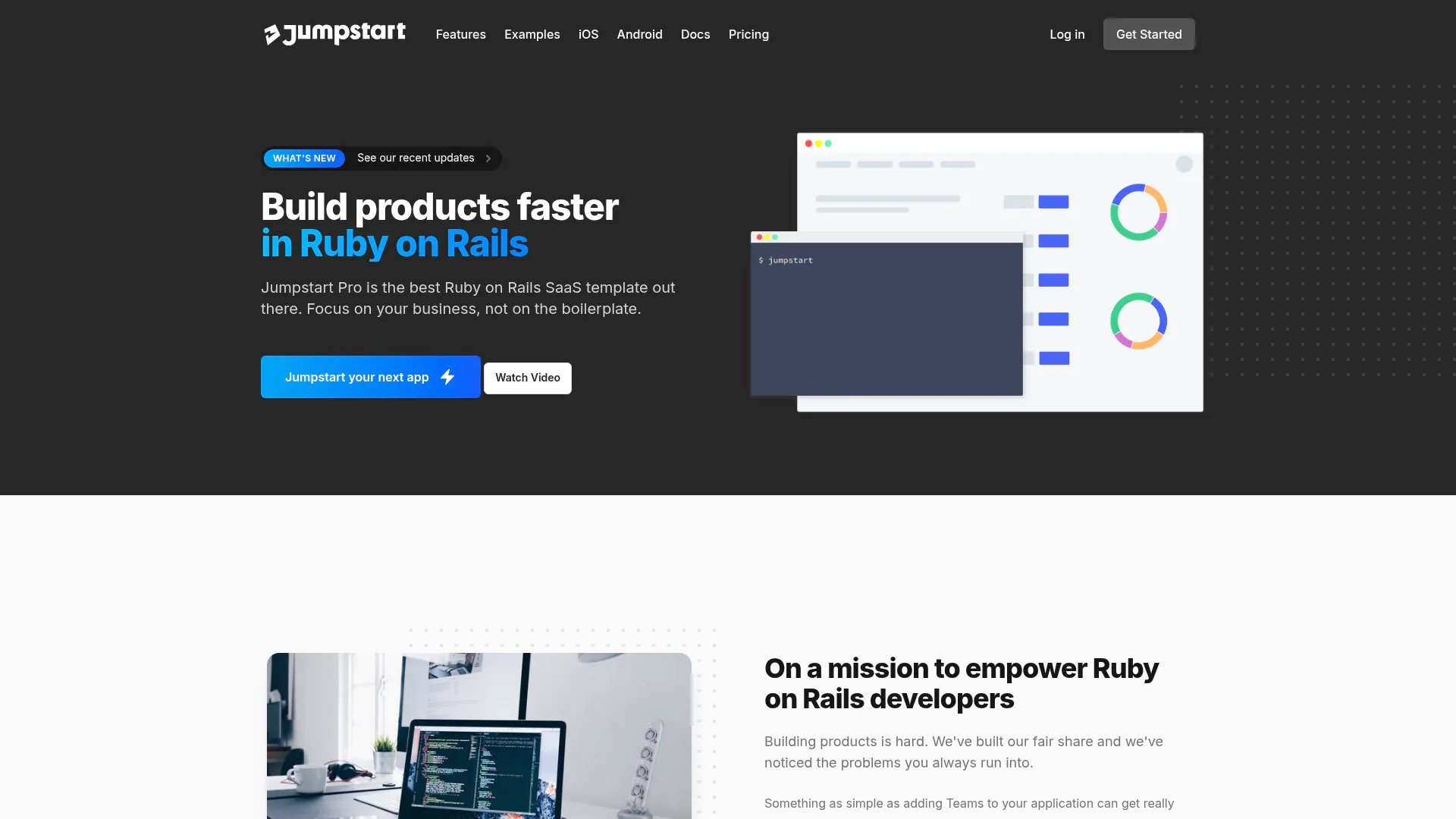
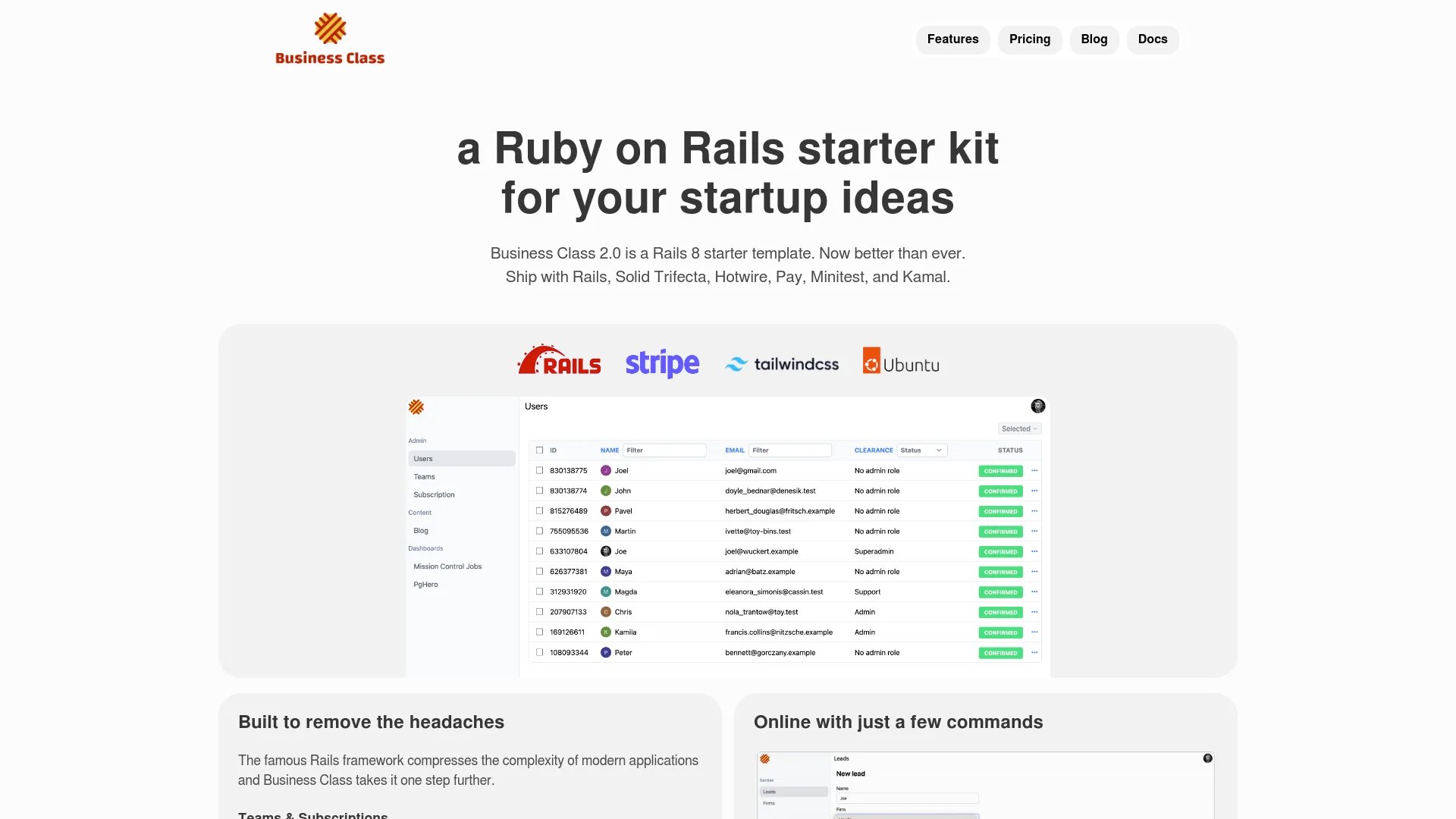
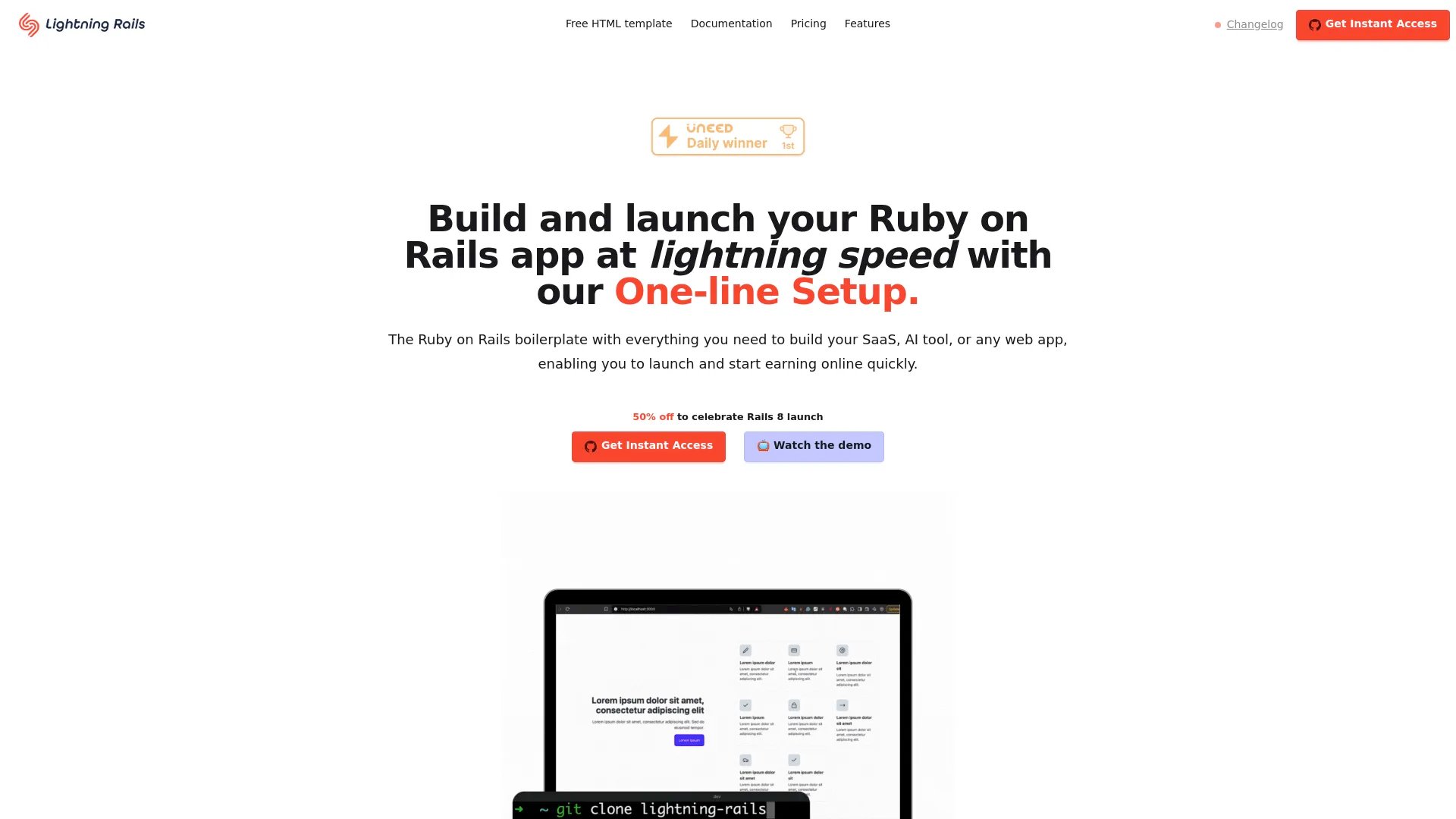
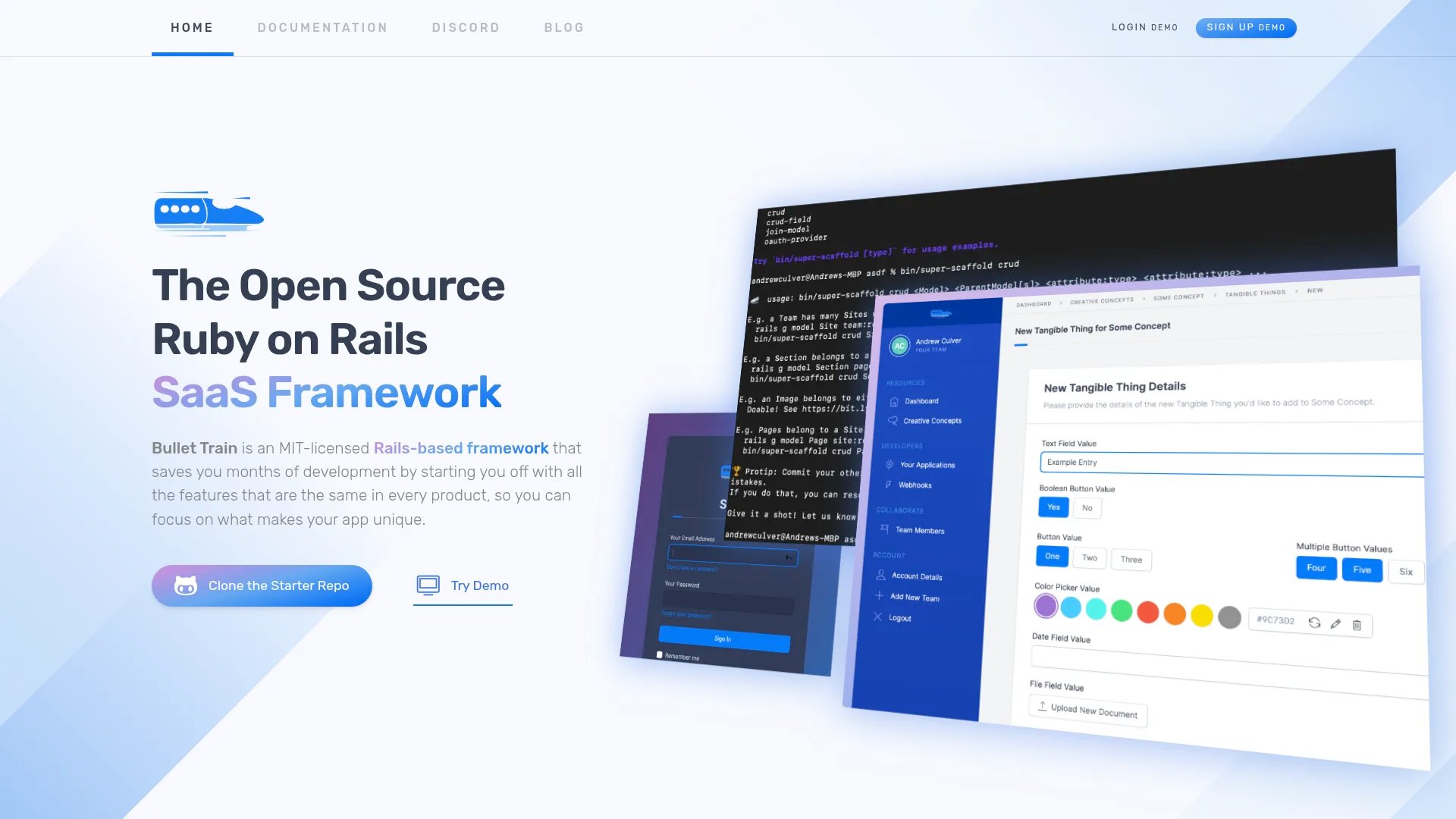
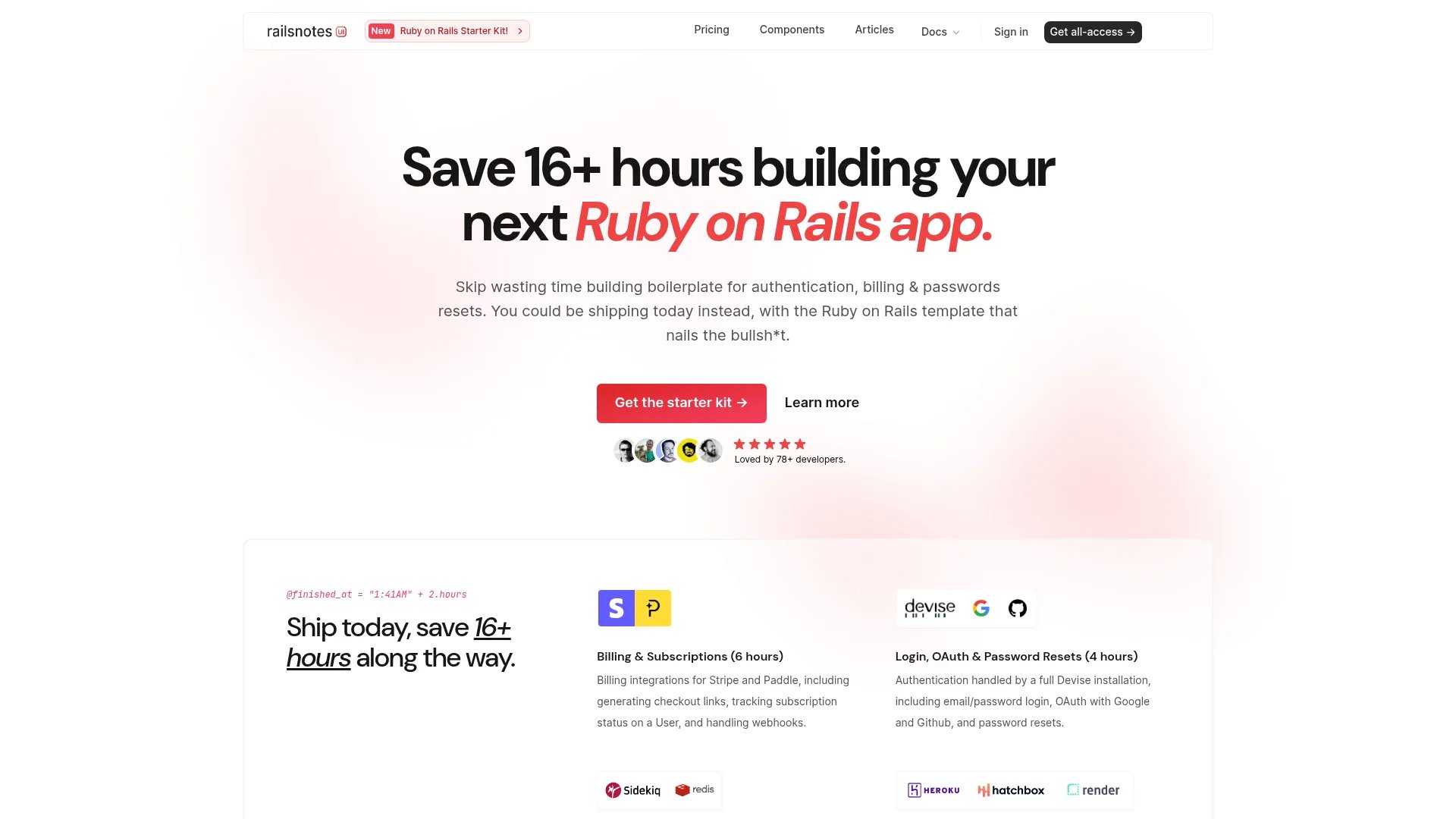
Jumpstart Pro is a comprehensive Ruby on Rails SaaS template designed to help developers build products faster by providing everything needed out of the box. It follows the Ruby on Rails philosophy while offering robust features that would otherwise be time-consuming to implement.
Key Benefits
Build SaaS applications rapidly with pre-built components
Focus on your business logic instead of boilerplate code
First-class multitenancy support for team collaboration
Integrated payment processing with multiple providers
Modern tech stack with Hotwire & Turbo
Easy upgrades to keep your app current
Jumpstart Pro solves common challenges like implementing teams, authentication, and payment processing that can become complex quickly. The template is fully customizable and follows best practices to make it easy to understand and extend.
Ruby on Rails template with pre-built authentication, billing, and password reset functionality
Ruby
Railnotes UI
Paddle
Stripe
Ruby on Rails
Features:
Auth
Background Jobs
Deployment
Docs
OAuth
SEO
Subscriptions
+1 more
Frequently Asked Questions
Ruby
What makes Ruby ideal for SaaS development?
Ruby excels in SaaS development due to its robust ecosystem, strong typing capabilities, and excellent library support. Ruby boilerplates leverage language-specific features to provide type-safe database queries, efficient API routing, and optimized runtime performance. The language's maturity means you get battle-tested packages for authentication, payment processing, and background jobs that integrate seamlessly.
Ruby on Rails
What Ruby on Rails-specific architecture patterns are implemented?
Ruby on Rails boilerplates leverage the framework's native architecture patterns including its routing system, middleware pipeline, and controller/handler structure. They implement Ruby on Rails's conventions for separating concerns, dependency injection, and service layer patterns. The codebase follows Ruby on Rails's best practices for organizing models, views/components, and business logic to ensure maintainability as your application grows.
Tailwind CSS
What Tailwind CSS-specific component architecture is used?
Tailwind CSS boilerplates follow the framework's component composition patterns with reusable, atomic design components. They implement Tailwind CSS's best practices for component structure, props handling, event management, and lifecycle methods. The component library includes authentication flows, dashboards, data tables, forms with validation, and navigation—all built with Tailwind CSS's native features like hooks (React), composition API (Vue), or directives (Angular).
Braintree
What Braintree API features are implemented?
Braintree boilerplates implement the provider's complete API suite including checkout sessions, subscription lifecycle management, customer portal, webhook event handling, and invoice generation. They use Braintree's latest API version with proper error handling, idempotency keys, and retry logic. The integration includes Braintree-specific features like payment intents, setup intents, subscription schedules, and tax calculation APIs.
Paddle
What Paddle API features are implemented?
Paddle boilerplates implement the provider's complete API suite including checkout sessions, subscription lifecycle management, customer portal, webhook event handling, and invoice generation. They use Paddle's latest API version with proper error handling, idempotency keys, and retry logic. The integration includes Paddle-specific features like payment intents, setup intents, subscription schedules, and tax calculation APIs.
PayPal
What PayPal API features are implemented?
PayPal boilerplates implement the provider's complete API suite including checkout sessions, subscription lifecycle management, customer portal, webhook event handling, and invoice generation. They use PayPal's latest API version with proper error handling, idempotency keys, and retry logic. The integration includes PayPal-specific features like payment intents, setup intents, subscription schedules, and tax calculation APIs.
Stripe
What Stripe API features are implemented?
Stripe boilerplates implement the provider's complete API suite including checkout sessions, subscription lifecycle management, customer portal, webhook event handling, and invoice generation. They use Stripe's latest API version with proper error handling, idempotency keys, and retry logic. The integration includes Stripe-specific features like payment intents, setup intents, subscription schedules, and tax calculation APIs.
Ruby
What Ruby-specific tools and libraries are included?
Ruby boilerplates include the language's most popular and production-proven tools. This typically includes testing frameworks, linters, formatters, build tools, and package managers specific to Ruby. You'll get pre-configured toolchains that enforce best practices, automated testing pipelines, and development environments optimized for Ruby development workflows.
Ruby on Rails
How does Ruby on Rails's ORM/database layer work in these boilerplates?
Ruby on Rails boilerplates use the framework's native ORM or query builder (Prisma, Eloquent, Active Record, SQLAlchemy, etc.) with pre-configured models for users, subscriptions, teams, and common SaaS entities. They include optimized queries, relationships, migrations, seeders, and database connection pooling. The implementation leverages Ruby on Rails's specific features like eager loading, query scopes, and transaction handling for performance.
Tailwind CSS
How is state management handled in Tailwind CSS boilerplates?
Tailwind CSS boilerplates use the framework's recommended state management approach—whether that's React Context + hooks, Redux Toolkit, Zustand, Pinia (Vue), NgRx (Angular), or Svelte stores. They include pre-configured state slices for authentication, user data, subscriptions, and UI state with proper TypeScript typing. The implementation follows Tailwind CSS's patterns for global state, local component state, and server state synchronization.
Braintree
How are Braintree webhooks handled securely?
Braintree webhooks are verified using the provider's signature validation to prevent spoofing attacks. The boilerplate includes webhook endpoints with proper Braintree signature verification, event type filtering, and idempotent event processing to handle duplicate deliveries. Events are processed asynchronously with retry logic, and the implementation handles Braintree's specific webhook events like subscription updates, payment failures, and customer changes.
Paddle
How are Paddle webhooks handled securely?
Paddle webhooks are verified using the provider's signature validation to prevent spoofing attacks. The boilerplate includes webhook endpoints with proper Paddle signature verification, event type filtering, and idempotent event processing to handle duplicate deliveries. Events are processed asynchronously with retry logic, and the implementation handles Paddle's specific webhook events like subscription updates, payment failures, and customer changes.
PayPal
How are PayPal webhooks handled securely?
PayPal webhooks are verified using the provider's signature validation to prevent spoofing attacks. The boilerplate includes webhook endpoints with proper PayPal signature verification, event type filtering, and idempotent event processing to handle duplicate deliveries. Events are processed asynchronously with retry logic, and the implementation handles PayPal's specific webhook events like subscription updates, payment failures, and customer changes.
Stripe
How are Stripe webhooks handled securely?
Stripe webhooks are verified using the provider's signature validation to prevent spoofing attacks. The boilerplate includes webhook endpoints with proper Stripe signature verification, event type filtering, and idempotent event processing to handle duplicate deliveries. Events are processed asynchronously with retry logic, and the implementation handles Stripe's specific webhook events like subscription updates, payment failures, and customer changes.