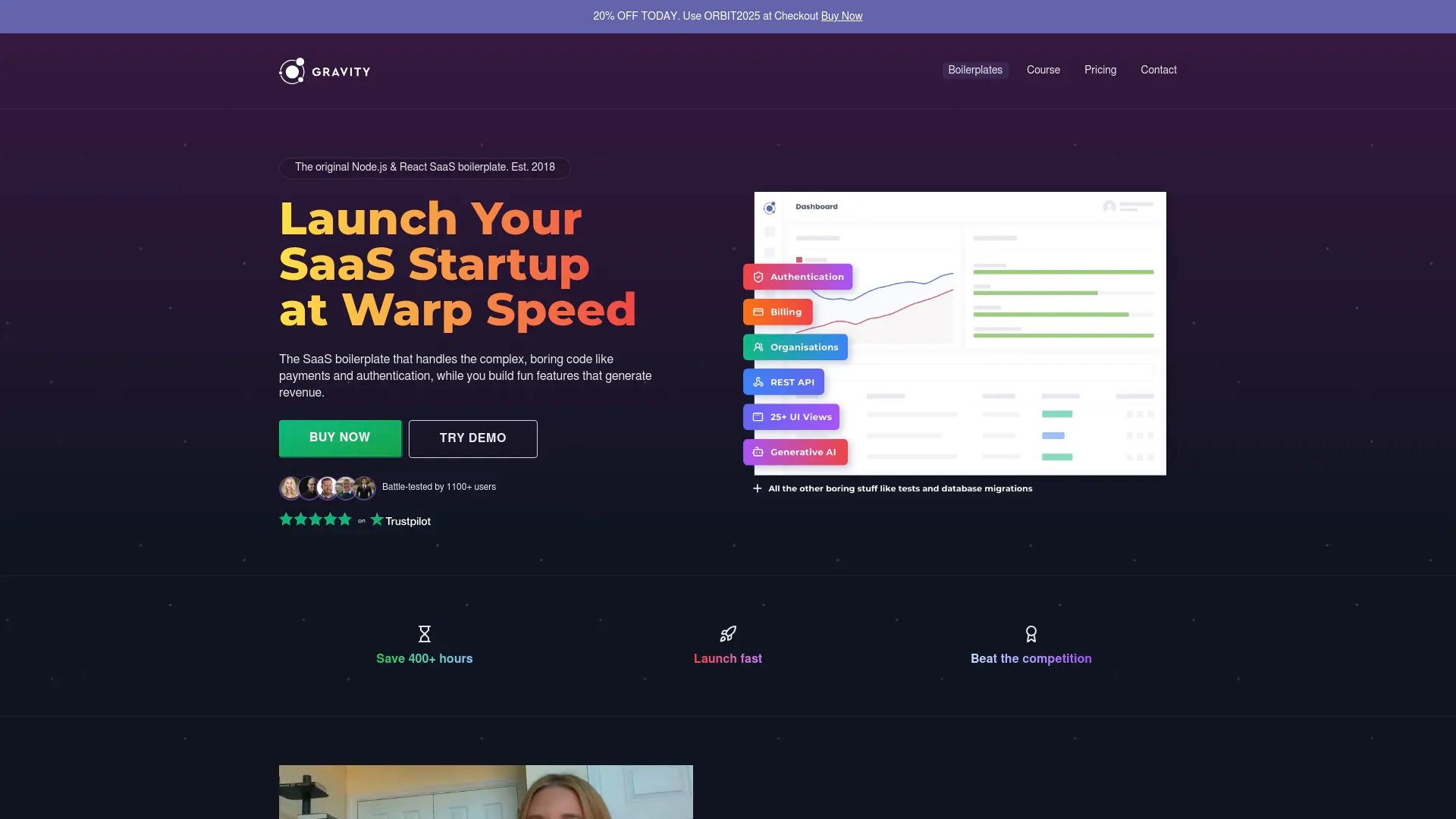
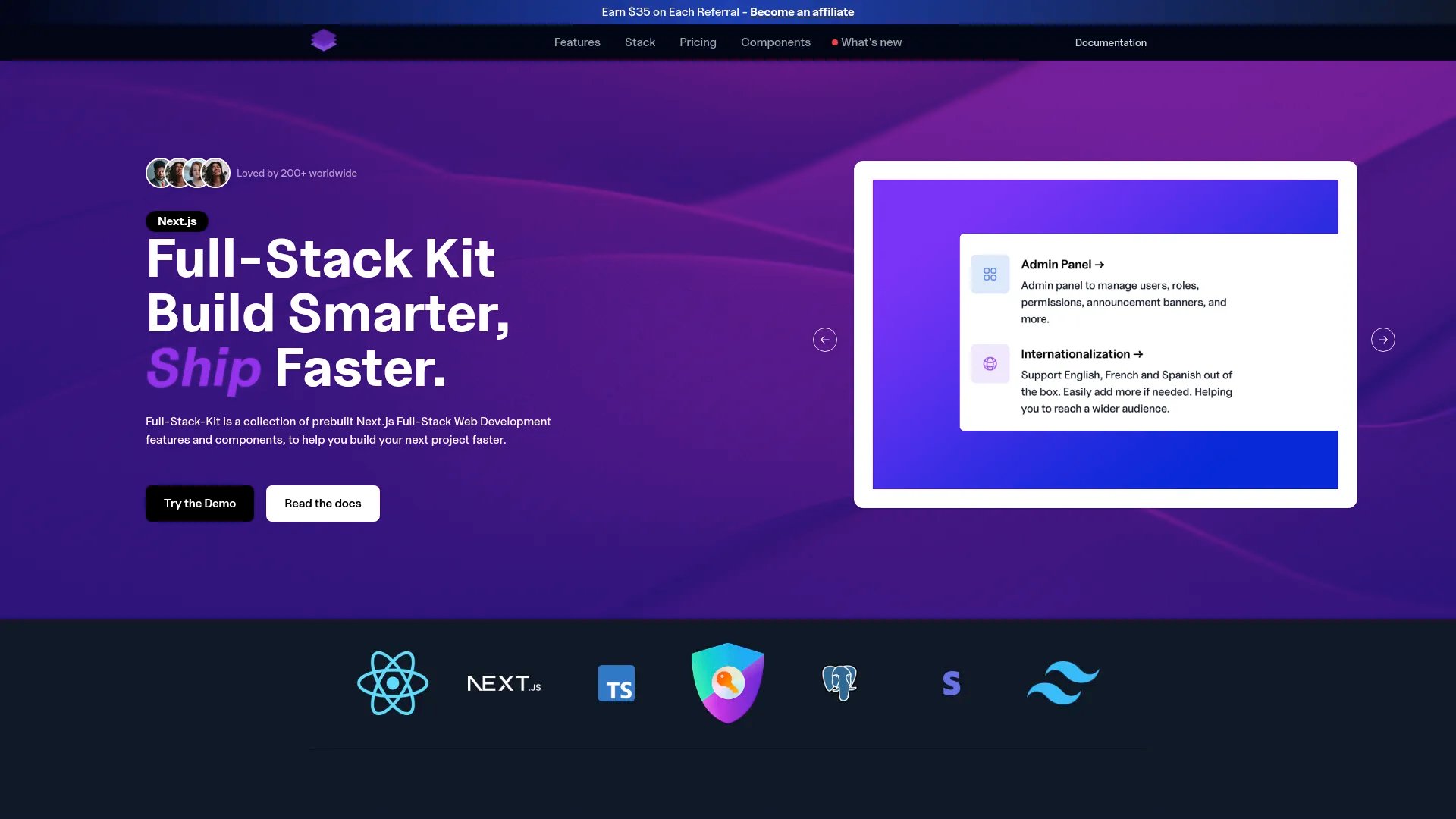
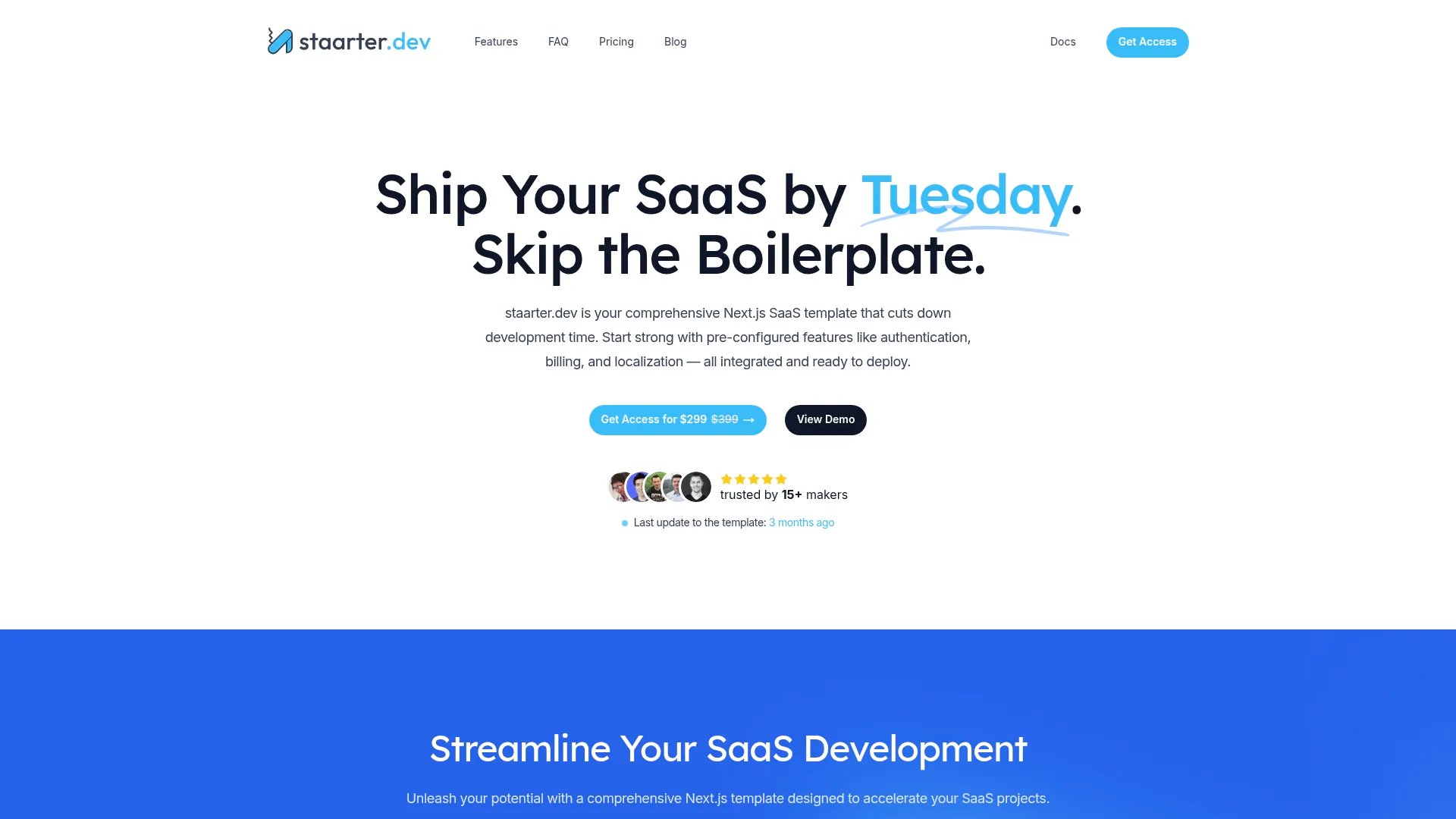
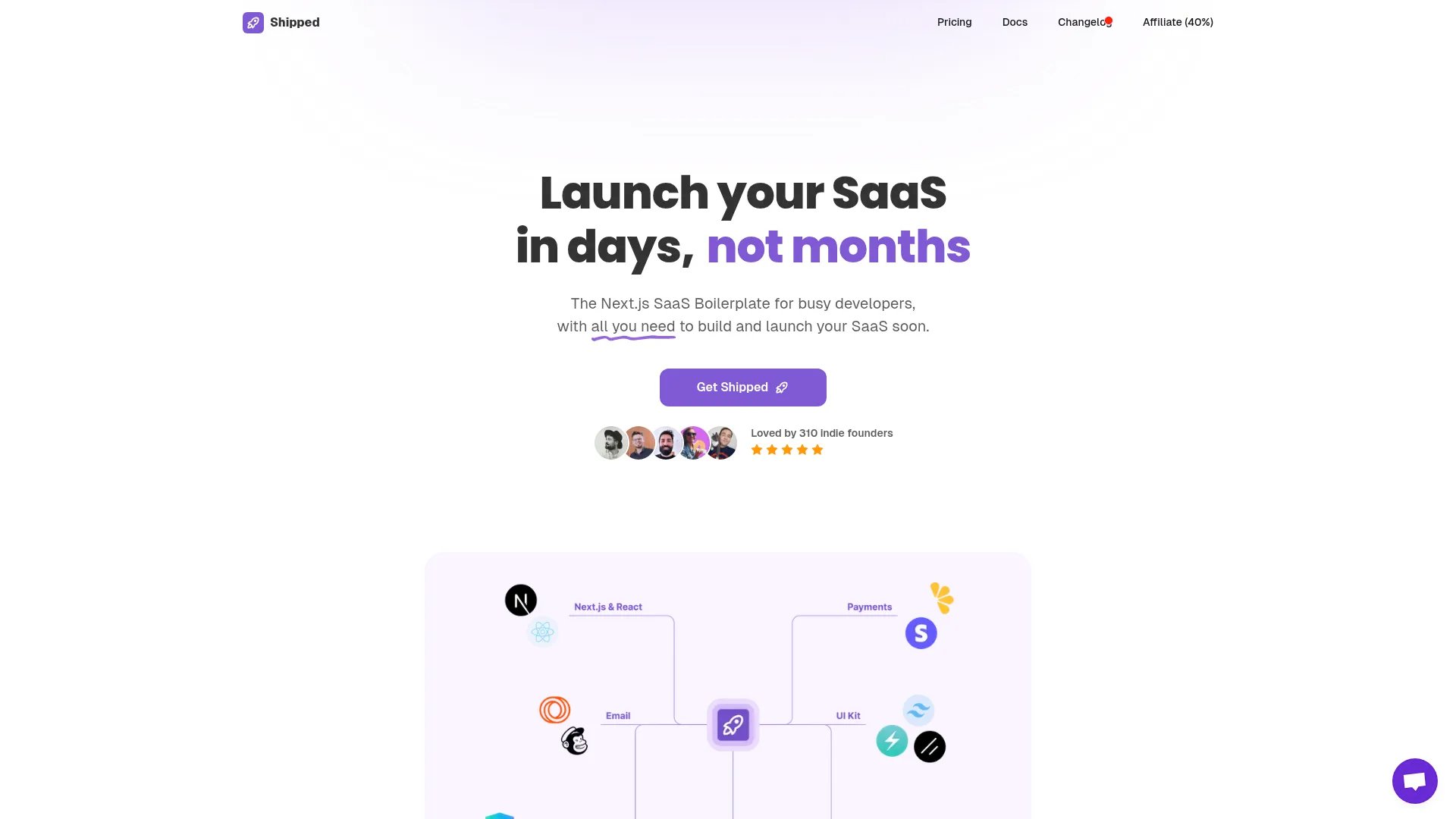
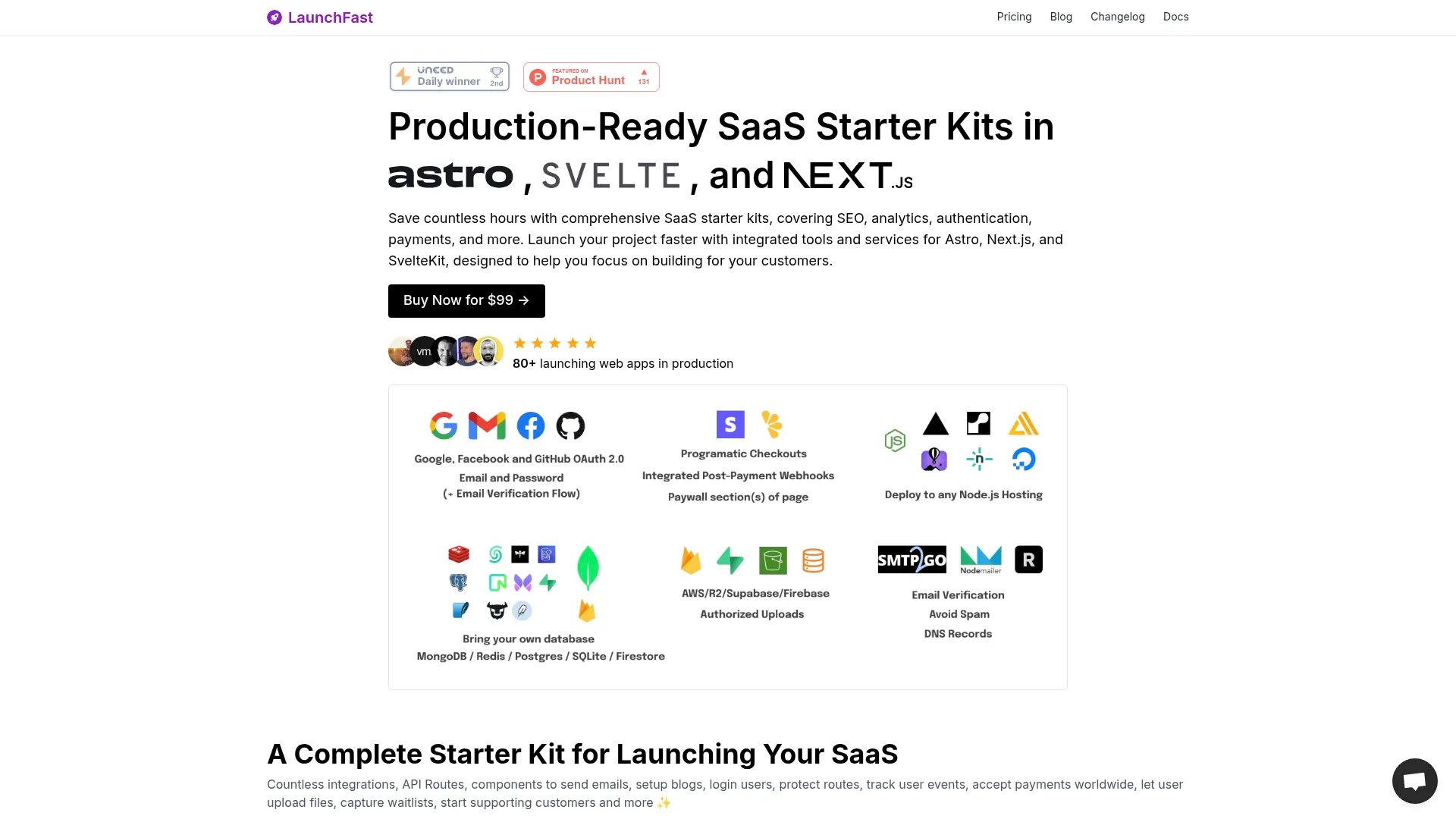
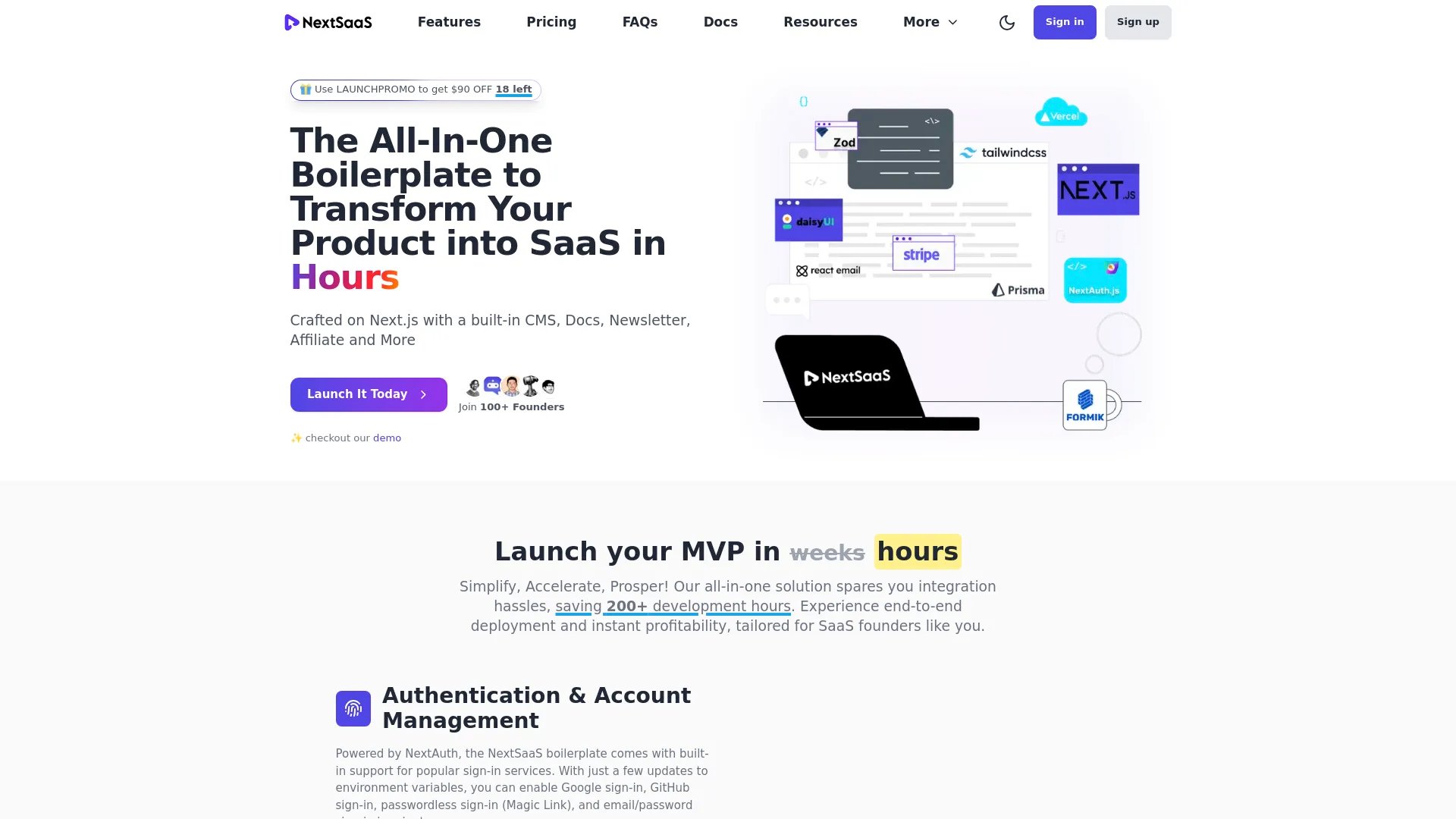
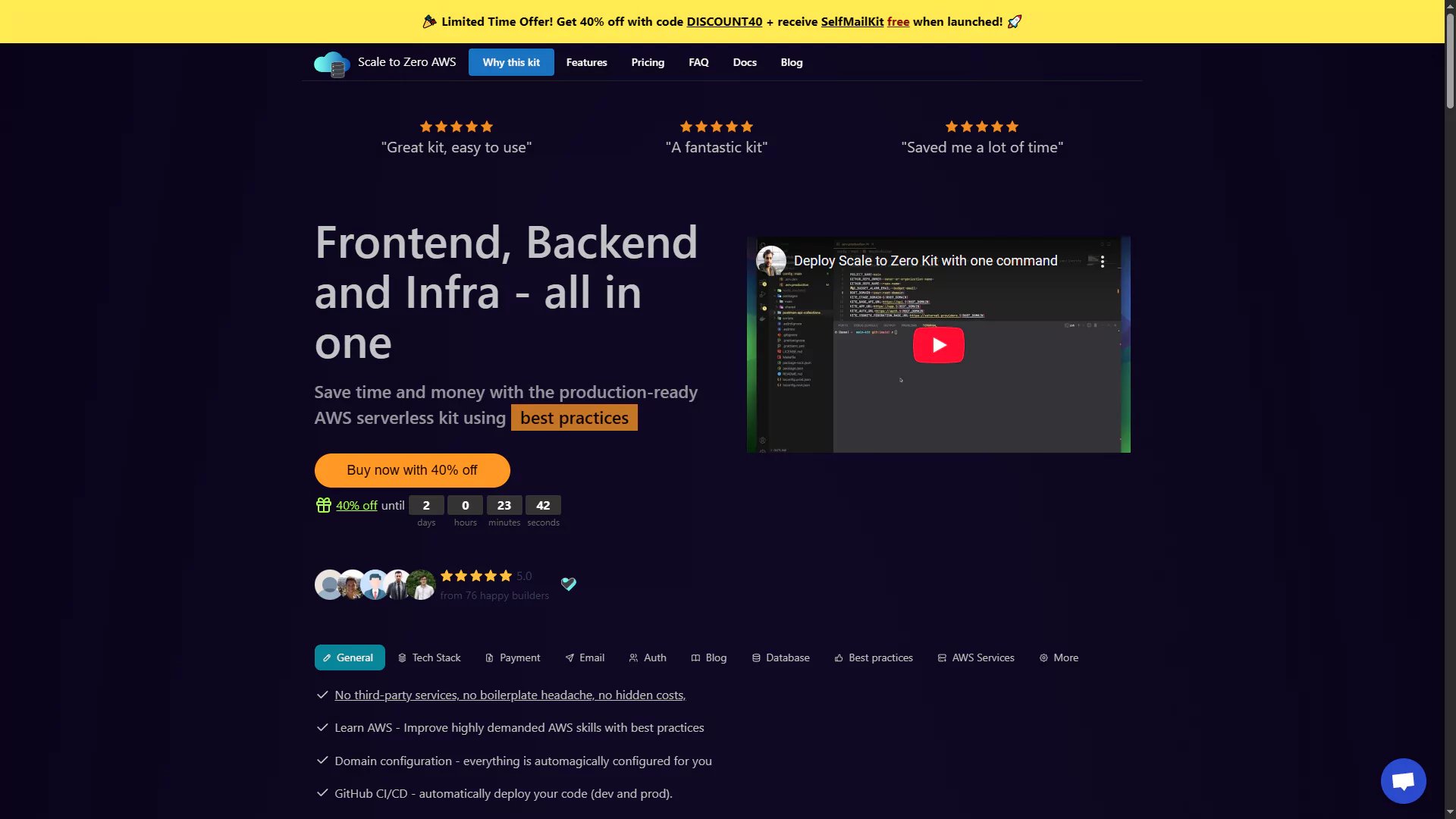
Gravity is a comprehensive SaaS boilerplate established in 2018 that handles complex code like payments and authentication, allowing you to focus on building revenue-generating features.
Production-ready AWS serverless kit using best practices
JavaScript
TypeScript
CSS
React
Tailwind CSS
DynamoDB
Lemon Squeezy
Stripe
Astro
Gatsby
Hugo
Next.js
Node.js
React
Features:
API
Auth
AWS
Blog
Caching
CI/CD
Community
+10 more
Frequently Asked Questions
JavaScript
What makes JavaScript ideal for SaaS development?
JavaScript excels in SaaS development due to its robust ecosystem, strong typing capabilities, and excellent library support. JavaScript boilerplates leverage language-specific features to provide type-safe database queries, efficient API routing, and optimized runtime performance. The language's maturity means you get battle-tested packages for authentication, payment processing, and background jobs that integrate seamlessly.
Next.js
What Next.js-specific architecture patterns are implemented?
Next.js boilerplates leverage the framework's native architecture patterns including its routing system, middleware pipeline, and controller/handler structure. They implement Next.js's conventions for separating concerns, dependency injection, and service layer patterns. The codebase follows Next.js's best practices for organizing models, views/components, and business logic to ensure maintainability as your application grows.
Node.js
What Node.js-specific architecture patterns are implemented?
Node.js boilerplates leverage the framework's native architecture patterns including its routing system, middleware pipeline, and controller/handler structure. They implement Node.js's conventions for separating concerns, dependency injection, and service layer patterns. The codebase follows Node.js's best practices for organizing models, views/components, and business logic to ensure maintainability as your application grows.
React
What React-specific architecture patterns are implemented?
React boilerplates leverage the framework's native architecture patterns including its routing system, middleware pipeline, and controller/handler structure. They implement React's conventions for separating concerns, dependency injection, and service layer patterns. The codebase follows React's best practices for organizing models, views/components, and business logic to ensure maintainability as your application grows.
React Native
What React Native-specific architecture patterns are implemented?
React Native boilerplates leverage the framework's native architecture patterns including its routing system, middleware pipeline, and controller/handler structure. They implement React Native's conventions for separating concerns, dependency injection, and service layer patterns. The codebase follows React Native's best practices for organizing models, views/components, and business logic to ensure maintainability as your application grows.
React
What React-specific component architecture is used?
React boilerplates follow the framework's component composition patterns with reusable, atomic design components. They implement React's best practices for component structure, props handling, event management, and lifecycle methods. The component library includes authentication flows, dashboards, data tables, forms with validation, and navigation—all built with React's native features like hooks (React), composition API (Vue), or directives (Angular).
shadcn/ui
What shadcn/ui-specific component architecture is used?
shadcn/ui boilerplates follow the framework's component composition patterns with reusable, atomic design components. They implement shadcn/ui's best practices for component structure, props handling, event management, and lifecycle methods. The component library includes authentication flows, dashboards, data tables, forms with validation, and navigation—all built with shadcn/ui's native features like hooks (React), composition API (Vue), or directives (Angular).
Amazon Redshift
What Amazon Redshift-specific features are leveraged in these boilerplates?
Amazon Redshift boilerplates utilize the database's native capabilities including its transaction model (ACID for SQL, eventual consistency for NoSQL), indexing strategies (B-tree, GiST, full-text search), and advanced features like JSON columns, array types, window functions, or document queries. The schema design takes advantage of Amazon Redshift's strengths—whether that's PostgreSQL's JSONB, MySQL's full-text search, MongoDB's aggregation pipeline, or Redis's data structures.
MariaDB
What MariaDB-specific features are leveraged in these boilerplates?
MariaDB boilerplates utilize the database's native capabilities including its transaction model (ACID for SQL, eventual consistency for NoSQL), indexing strategies (B-tree, GiST, full-text search), and advanced features like JSON columns, array types, window functions, or document queries. The schema design takes advantage of MariaDB's strengths—whether that's PostgreSQL's JSONB, MySQL's full-text search, MongoDB's aggregation pipeline, or Redis's data structures.
MongoDB
What MongoDB-specific features are leveraged in these boilerplates?
MongoDB boilerplates utilize the database's native capabilities including its transaction model (ACID for SQL, eventual consistency for NoSQL), indexing strategies (B-tree, GiST, full-text search), and advanced features like JSON columns, array types, window functions, or document queries. The schema design takes advantage of MongoDB's strengths—whether that's PostgreSQL's JSONB, MySQL's full-text search, MongoDB's aggregation pipeline, or Redis's data structures.
MSSQL
What MSSQL-specific features are leveraged in these boilerplates?
MSSQL boilerplates utilize the database's native capabilities including its transaction model (ACID for SQL, eventual consistency for NoSQL), indexing strategies (B-tree, GiST, full-text search), and advanced features like JSON columns, array types, window functions, or document queries. The schema design takes advantage of MSSQL's strengths—whether that's PostgreSQL's JSONB, MySQL's full-text search, MongoDB's aggregation pipeline, or Redis's data structures.
MySQL
What MySQL-specific features are leveraged in these boilerplates?
MySQL boilerplates utilize the database's native capabilities including its transaction model (ACID for SQL, eventual consistency for NoSQL), indexing strategies (B-tree, GiST, full-text search), and advanced features like JSON columns, array types, window functions, or document queries. The schema design takes advantage of MySQL's strengths—whether that's PostgreSQL's JSONB, MySQL's full-text search, MongoDB's aggregation pipeline, or Redis's data structures.
Oracle
What Oracle-specific features are leveraged in these boilerplates?
Oracle boilerplates utilize the database's native capabilities including its transaction model (ACID for SQL, eventual consistency for NoSQL), indexing strategies (B-tree, GiST, full-text search), and advanced features like JSON columns, array types, window functions, or document queries. The schema design takes advantage of Oracle's strengths—whether that's PostgreSQL's JSONB, MySQL's full-text search, MongoDB's aggregation pipeline, or Redis's data structures.
PostgreSQL
What PostgreSQL-specific features are leveraged in these boilerplates?
PostgreSQL boilerplates utilize the database's native capabilities including its transaction model (ACID for SQL, eventual consistency for NoSQL), indexing strategies (B-tree, GiST, full-text search), and advanced features like JSON columns, array types, window functions, or document queries. The schema design takes advantage of PostgreSQL's strengths—whether that's PostgreSQL's JSONB, MySQL's full-text search, MongoDB's aggregation pipeline, or Redis's data structures.
SQLite
What SQLite-specific features are leveraged in these boilerplates?
SQLite boilerplates utilize the database's native capabilities including its transaction model (ACID for SQL, eventual consistency for NoSQL), indexing strategies (B-tree, GiST, full-text search), and advanced features like JSON columns, array types, window functions, or document queries. The schema design takes advantage of SQLite's strengths—whether that's PostgreSQL's JSONB, MySQL's full-text search, MongoDB's aggregation pipeline, or Redis's data structures.