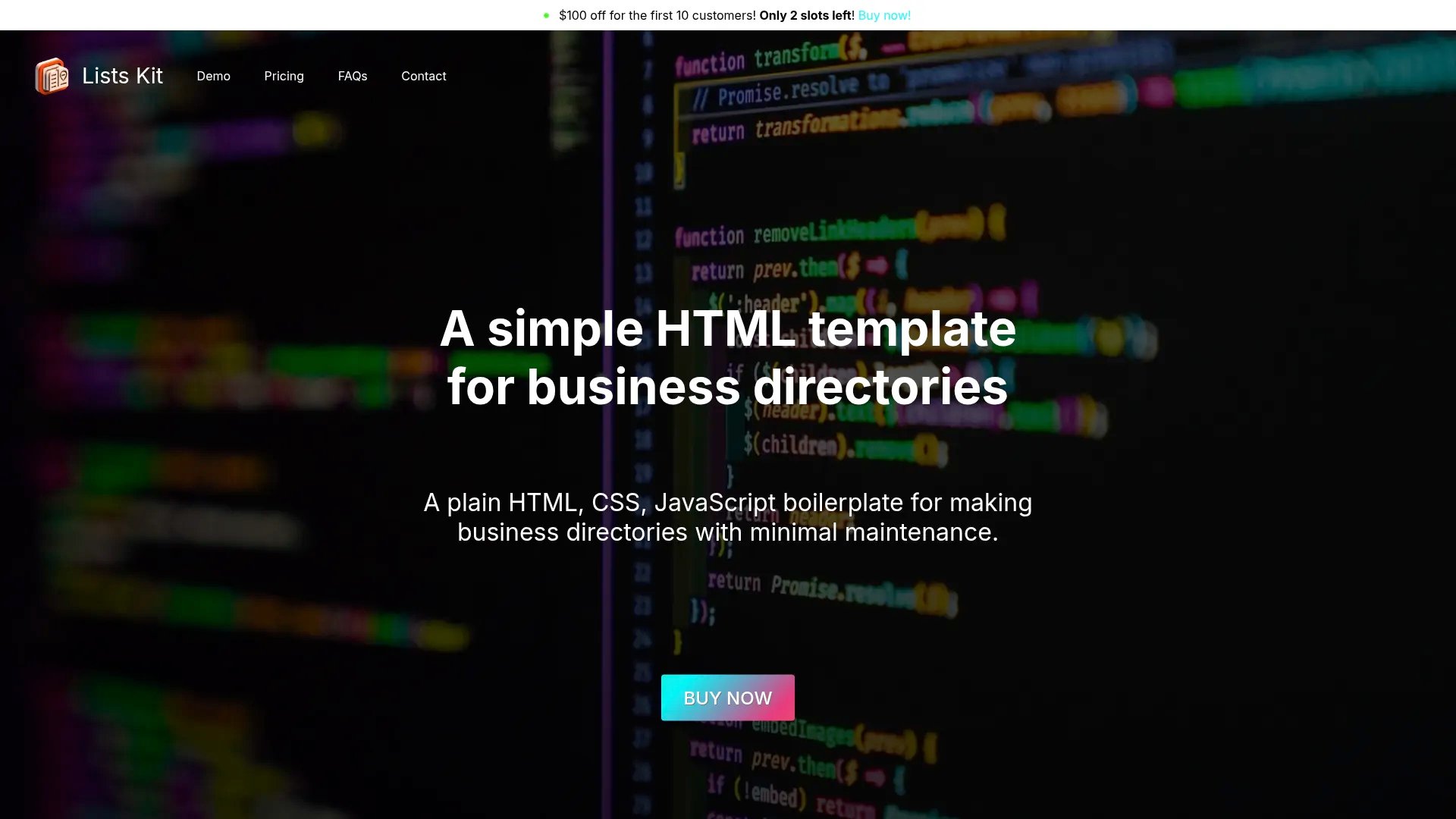
A simple boilerplate made entirely in plain vanilla HTML, CSS and Javascript. Super versatile on most web hosting platforms. Left untouched, it can probably last a decade.
Works everywhere. Lasts forever.
Lightning fast time-to-market
Connect your repo or drop this as a single index.html file into a web host, and you're live. No build step. No terminal. No installation of tools required. Spend a few hours tweaking the color, copy and images, and it's ready to launch.
From idea to site in a day, not weeks.
Timely support
Prompt support run by humans if you need help customizing the boilerplate. You get access to a Telegram community to share tips and ideas.
Help just a message away.
Performant right out of the box
We chased Google Lighthouse scores so that you didn't have to.
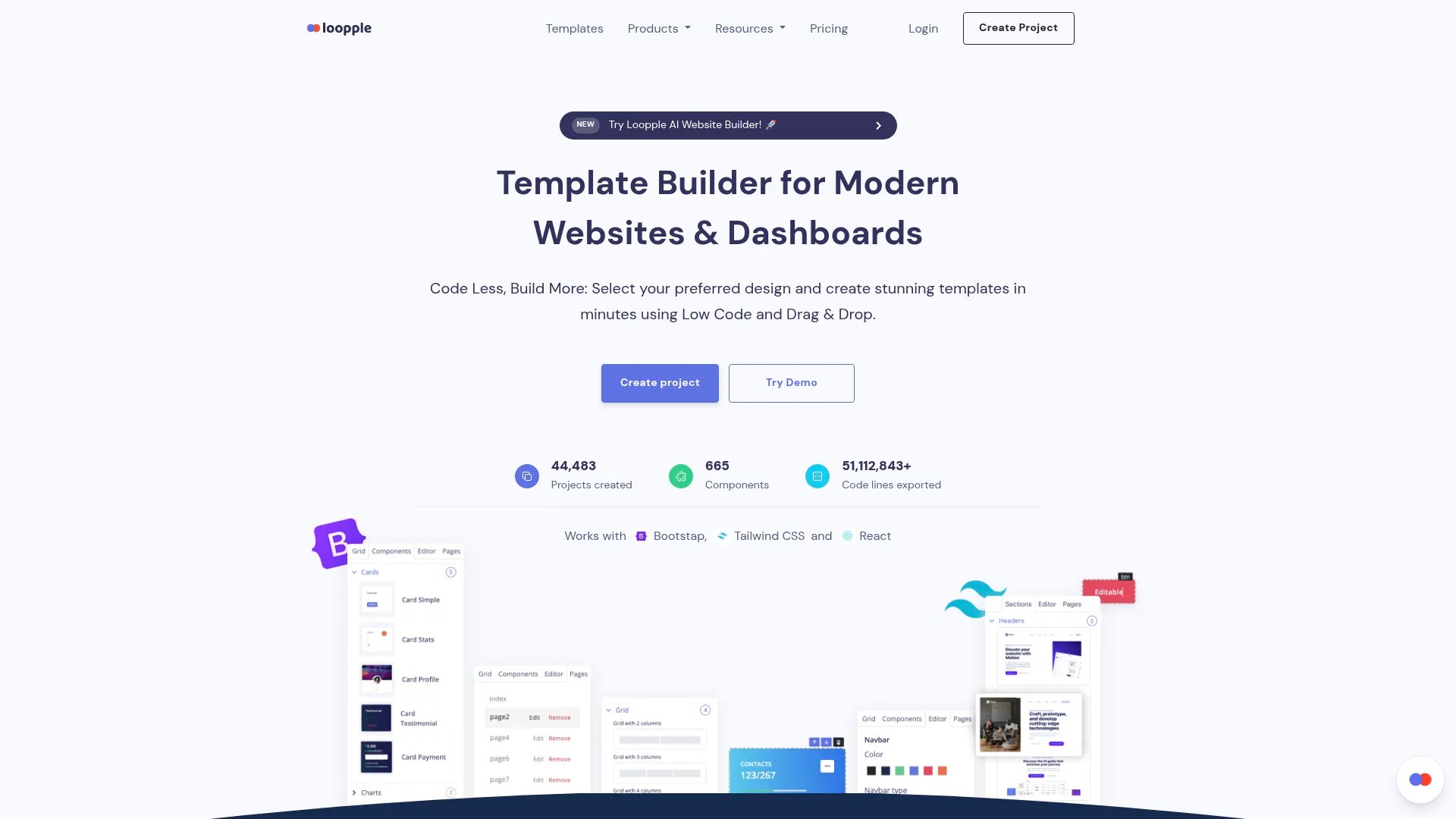
Template builder for websites and dashboards using low-code drag & drop interface
HTML
JavaScript
Chakra UI
CSS
Tailwind CSS
Bootstrap
React
Features:
AI
Dashboard
Developer Tools
Landing Page
Page Builder
Templates
UI Components
Frequently Asked Questions
HTML
What makes HTML ideal for SaaS development?
HTML excels in SaaS development due to its robust ecosystem, strong typing capabilities, and excellent library support. HTML boilerplates leverage language-specific features to provide type-safe database queries, efficient API routing, and optimized runtime performance. The language's maturity means you get battle-tested packages for authentication, payment processing, and background jobs that integrate seamlessly.
JavaScript
What makes JavaScript ideal for SaaS development?
JavaScript excels in SaaS development due to its robust ecosystem, strong typing capabilities, and excellent library support. JavaScript boilerplates leverage language-specific features to provide type-safe database queries, efficient API routing, and optimized runtime performance. The language's maturity means you get battle-tested packages for authentication, payment processing, and background jobs that integrate seamlessly.
CSS
What CSS-specific component architecture is used?
CSS boilerplates follow the framework's component composition patterns with reusable, atomic design components. They implement CSS's best practices for component structure, props handling, event management, and lifecycle methods. The component library includes authentication flows, dashboards, data tables, forms with validation, and navigation—all built with CSS's native features like hooks (React), composition API (Vue), or directives (Angular).
FontAwesome
What FontAwesome-specific component architecture is used?
FontAwesome boilerplates follow the framework's component composition patterns with reusable, atomic design components. They implement FontAwesome's best practices for component structure, props handling, event management, and lifecycle methods. The component library includes authentication flows, dashboards, data tables, forms with validation, and navigation—all built with FontAwesome's native features like hooks (React), composition API (Vue), or directives (Angular).
Google Fonts
What Google Fonts-specific component architecture is used?
Google Fonts boilerplates follow the framework's component composition patterns with reusable, atomic design components. They implement Google Fonts's best practices for component structure, props handling, event management, and lifecycle methods. The component library includes authentication flows, dashboards, data tables, forms with validation, and navigation—all built with Google Fonts's native features like hooks (React), composition API (Vue), or directives (Angular).
HTML
What HTML-specific tools and libraries are included?
HTML boilerplates include the language's most popular and production-proven tools. This typically includes testing frameworks, linters, formatters, build tools, and package managers specific to HTML. You'll get pre-configured toolchains that enforce best practices, automated testing pipelines, and development environments optimized for HTML development workflows.
JavaScript
What JavaScript-specific tools and libraries are included?
JavaScript boilerplates include the language's most popular and production-proven tools. This typically includes testing frameworks, linters, formatters, build tools, and package managers specific to JavaScript. You'll get pre-configured toolchains that enforce best practices, automated testing pipelines, and development environments optimized for JavaScript development workflows.
CSS
How is state management handled in CSS boilerplates?
CSS boilerplates use the framework's recommended state management approach—whether that's React Context + hooks, Redux Toolkit, Zustand, Pinia (Vue), NgRx (Angular), or Svelte stores. They include pre-configured state slices for authentication, user data, subscriptions, and UI state with proper TypeScript typing. The implementation follows CSS's patterns for global state, local component state, and server state synchronization.
FontAwesome
How is state management handled in FontAwesome boilerplates?
FontAwesome boilerplates use the framework's recommended state management approach—whether that's React Context + hooks, Redux Toolkit, Zustand, Pinia (Vue), NgRx (Angular), or Svelte stores. They include pre-configured state slices for authentication, user data, subscriptions, and UI state with proper TypeScript typing. The implementation follows FontAwesome's patterns for global state, local component state, and server state synchronization.
Google Fonts
How is state management handled in Google Fonts boilerplates?
Google Fonts boilerplates use the framework's recommended state management approach—whether that's React Context + hooks, Redux Toolkit, Zustand, Pinia (Vue), NgRx (Angular), or Svelte stores. They include pre-configured state slices for authentication, user data, subscriptions, and UI state with proper TypeScript typing. The implementation follows Google Fonts's patterns for global state, local component state, and server state synchronization.