$69
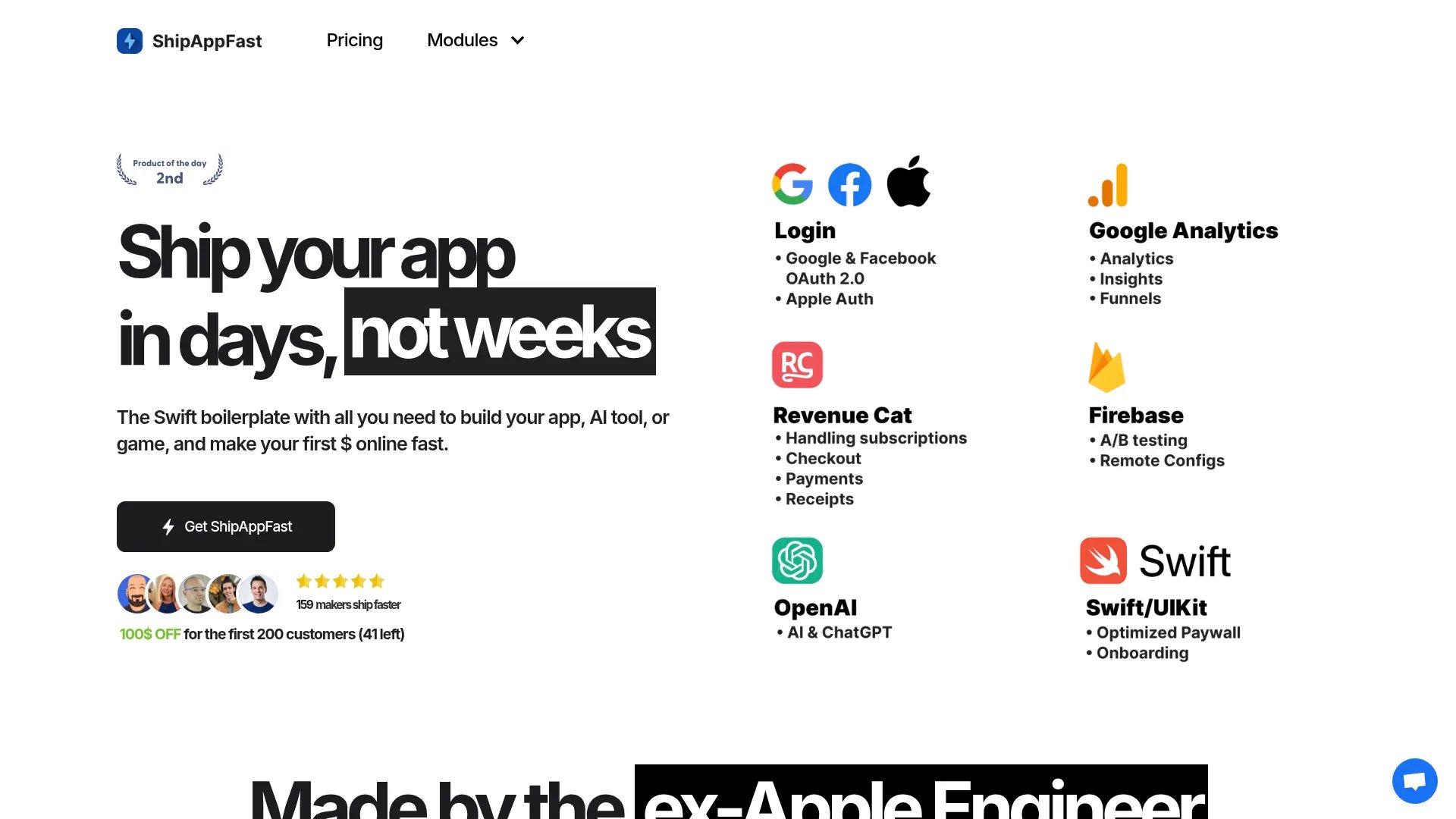
ShipAppFast
Swift boilerplate with modules to build your iOS app, AI tool, or game quickly
Swift
SwiftUI
Firestore
RevenueCat
StoreKit 2
GameKit
SpriteKit
SwiftUI
Features:
AI
Analytics
Auth
Logging
Mobile Development
Onboarding
Payments
+1 more
Explore 1 boilerplate in this collection. Find the perfect starting point for your next project.
Swift boilerplate with modules to build your iOS app, AI tool, or game quickly
Features:
GameKit provides a comprehensive framework architecture with built-in routing, middleware, and ORM integration tailored for SaaS development. Our GameKit boilerplates implement the framework's conventions—from its MVC/API structure to its plugin ecosystem—giving you a production-ready foundation that leverages GameKit's specific strengths in web application development.
GameKit boilerplates are structured around the framework's architecture patterns and conventions. They integrate GameKit's native ORM/query builder with optimized models and relationships, implement the framework's middleware pipeline for authentication and validation, and use framework-specific packages for caching, queues, and background jobs. The routing structure follows GameKit's conventions, ensuring predictable code organization as your SaaS scales.
Browse our collection of 1 GameKit boilerplate to find the perfect starting point for your next SaaS project. Each boilerplate has been carefully reviewed to ensure quality, security, and production-readiness.
GameKit boilerplates leverage the framework's native architecture patterns including its routing system, middleware pipeline, and controller/handler structure. They implement GameKit's conventions for separating concerns, dependency injection, and service layer patterns. The codebase follows GameKit's best practices for organizing models, views/components, and business logic to ensure maintainability as your application grows.
GameKit boilerplates use the framework's native ORM or query builder (Prisma, Eloquent, Active Record, SQLAlchemy, etc.) with pre-configured models for users, subscriptions, teams, and common SaaS entities. They include optimized queries, relationships, migrations, seeders, and database connection pooling. The implementation leverages GameKit's specific features like eager loading, query scopes, and transaction handling for performance.
GameKit boilerplates are optimized for the framework's ideal deployment platforms. This includes containerization with Docker, serverless configurations (if supported), CDN integration, and environment-specific builds. They include GameKit-specific deployment configurations for platforms like Vercel (Next.js), Heroku (Rails), Platform.sh (Laravel), or cloud providers with proper build steps, environment variables, and scaling configurations.
GameKit boilerplates include essential framework-specific middleware and plugins for authentication (Passport, NextAuth, Devise, etc.), rate limiting, CORS, session management, and request validation. They leverage GameKit's ecosystem with popular packages for tasks like job queuing, caching, email handling, and file uploads—all configured with production-ready settings and proper error handling.
GameKit boilerplates target the latest stable framework version and follow the framework's upgrade guidelines. They're structured to minimize breaking changes when updating GameKit versions—using stable APIs, avoiding deprecated features, and documenting any version-specific dependencies. Most include update guides for migrating to newer GameKit versions while maintaining your custom features.