$249
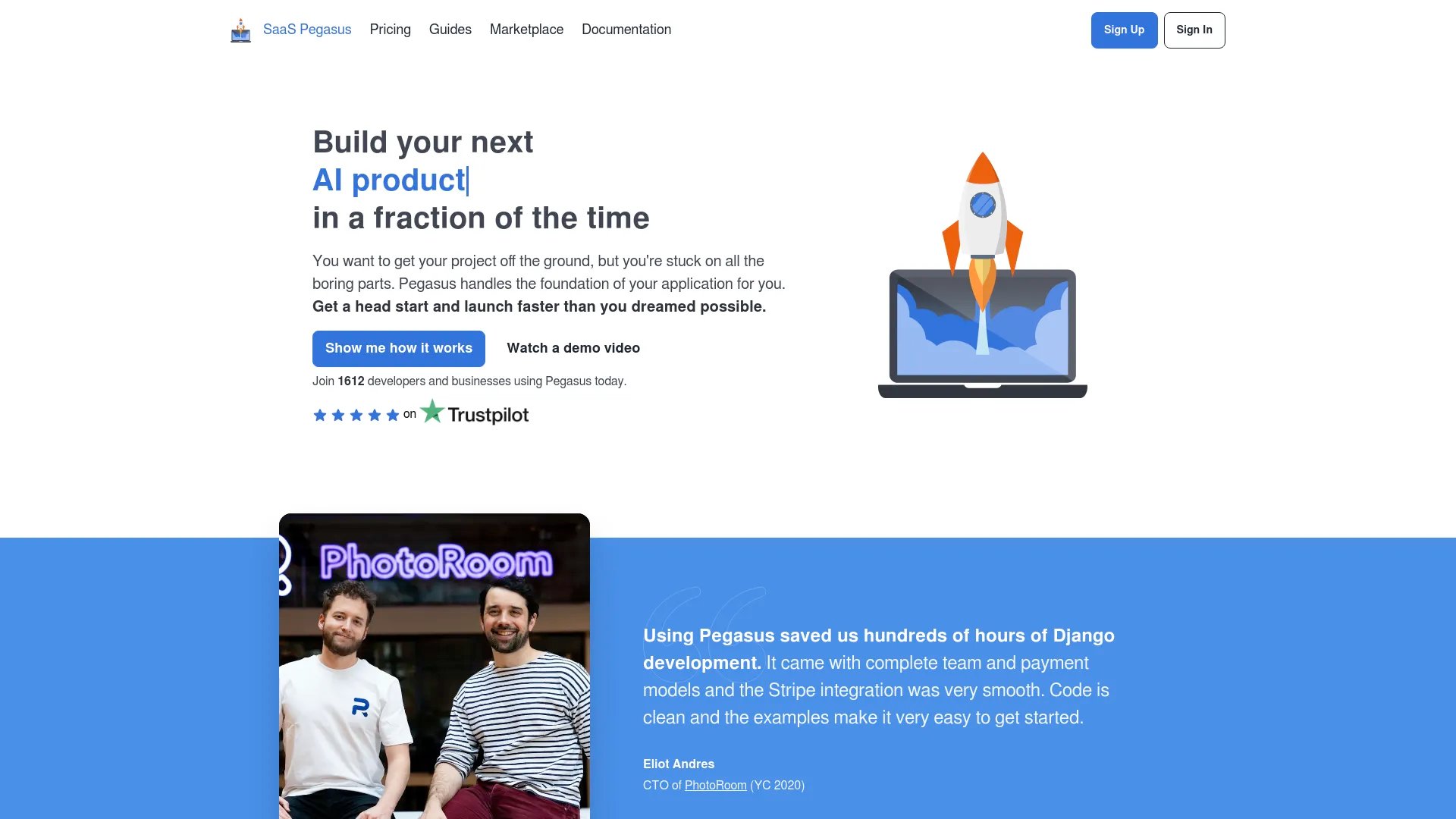
SaaS Pegasus
Django-based SaaS boilerplate for building web applications
Python
Bootstrap
Bulma
HTMX
React
Tailwind CSS
PostgreSQL
SQLite
Stripe
Django
Wagtail CMS
Features:
2FA
Admin
AI
API
Auth
Backend
Background Jobs
+14 more
Explore 1 boilerplate in this collection. Find the perfect starting point for your next project.
Django-based SaaS boilerplate for building web applications
Features:
HTMX offers a powerful component-based architecture with reactive state management and optimized rendering for building modern SaaS interfaces. Our HTMX boilerplates implement the framework's component patterns—from hooks and lifecycle methods to state management solutions—providing a UI foundation that leverages HTMX's performance optimizations and developer ergonomics.
HTMX boilerplates implement the framework's component architecture with reusable atomic components following HTMX's best practices. They integrate HTMX-native state management (Context API, Redux, Pinia, NgRx) with typed state slices, leverage HTMX's performance APIs (memoization, lazy loading, code splitting), and include HTMX-optimized styling solutions (CSS Modules, styled-components, scoped styles). The component hierarchy follows HTMX's patterns for maximum reusability.
Browse our collection of 1 HTMX boilerplate to find the perfect starting point for your next SaaS project. Each boilerplate has been carefully reviewed to ensure quality, security, and production-readiness.
HTMX boilerplates follow the framework's component composition patterns with reusable, atomic design components. They implement HTMX's best practices for component structure, props handling, event management, and lifecycle methods. The component library includes authentication flows, dashboards, data tables, forms with validation, and navigation—all built with HTMX's native features like hooks (React), composition API (Vue), or directives (Angular).
HTMX boilerplates use the framework's recommended state management approach—whether that's React Context + hooks, Redux Toolkit, Zustand, Pinia (Vue), NgRx (Angular), or Svelte stores. They include pre-configured state slices for authentication, user data, subscriptions, and UI state with proper TypeScript typing. The implementation follows HTMX's patterns for global state, local component state, and server state synchronization.
HTMX boilerplates typically use modern CSS-in-JS solutions or utility-first frameworks optimized for the framework. This includes Tailwind CSS, CSS Modules, styled-components, or HTMX's native styling features. The styling system includes a design system with consistent spacing, typography, colors, and breakpoints. All styles are optimized for HTMX's rendering pipeline with proper tree-shaking and production builds.
HTMX boilerplates implement framework-specific performance patterns including code splitting, lazy loading, image optimization, and bundle size reduction. They use HTMX's performance APIs like React.memo, useMemo, Vue's async components, or Angular's OnPush change detection. The build configuration includes tree-shaking, minification, and production optimizations specific to HTMX's toolchain.
HTMX boilerplates follow WCAG 2.1 AA standards with proper semantic HTML, ARIA labels, keyboard navigation, and focus management using HTMX's accessibility features. Components include proper roles, labels, and announcements for screen readers. The implementation leverages HTMX's a11y tooling and testing utilities to ensure forms, modals, and interactive elements are fully accessible.